River in Rotterdam

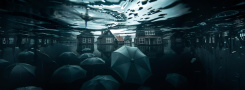
A river of words has been flowing through the Hoogwaterwinkel in Rotterdam.
Projected on the wall, a vertical current of terms—slip, silt, confluence, mouth, seep, estuary—slowly passes by. Some are hydrological, some vernacular, some half-forgotten. Together they form a lexicon that behaves less like a list and more like water: accumulating, diverging, eroding meaning as it moves.
Visitors step into the projection and their shadows interrupt the flow. Words break, disappear, reappear further downstream. Reading becomes bodily. Language is no longer something you stand outside of, but something you momentarily wade through.
The river of words is part of the wider NulNAP research: an attempt to think about water, landscape, and climate not only through data or maps, but through attention, encounter, and drift. Here, language itself becomes terrain—shaped by use, history, and movement, rather than fixed definitions.
In the Hoogwaterwinkel, a space dedicated to water levels, flood futures, and adaptation, this slow linguistic current offers a different register. It doesn’t explain. It doesn’t warn. It lingers. It invites noticing.
Like walking along an imaginary coastline, reading this river asks for a different tempo. Not to extract meaning, but to let it pass by—and see which words stay with you once the water moves on.
| « POM Perth 2025 | <-- previous post | next post --> | Terps » |
|---|