Learning to see [emptiness]

I took this photograph on January 12, 2026, from a bus, traveling on the highway past a wintery Eemland. No walk, no setup, no carefully chosen viewpoint. The landscape slid past, filtered through glass, condensation, and speed.
What can be seen is almost nothing. A horizon that barely wants to be a horizon. A thin strip of green, grey above it, darkness below. The bus window inscribes itself forcefully into the image: droplets, dirt, streaks. The image refuses depth. It even refuses recognition. Everything is reduced to rhythm and layer: horizontal, flat, inconspicuous.
Eemland is not a landscape that reveals itself easily. It does not present itself through icons or viewpoints. There are no mountains, no ruins, no dramatic transitions. Everything is flat, repetitive, slowed down. Those who search for meaningful moments often look straight past it. Or look through it, as through the window of a bus.

This photograph, taken just seconds earlier, helps make sense of the first one. In this image there is something to hold on to: a darker form interrupting the horizontal bands. Something that can be read – ‘wait, this might be a car’. However indistinct, it offers the eye a point of orientation. It says: there is something here.
I needed three years of PhD research to be able to notice these images at all. Three years of walking, talking, looking, doubting. Three years spent thinking about makeability, water levels, water management, infrastructure, and narratives of control and care. Only then, sitting idly in a bus, did this image become visible to me.
It is tempting to see this as coincidence. But coincidence here cannot be separated from practice. The ability to see emptiness has to be learned. Especially in a country like the Netherlands, where space is always functional, always named, always subdivided. Emptiness is quickly understood as something that is waiting to be filled.
Perhaps this is why the photograph does not only say something about Eemland, but about the Netherlands as well. About how seeing here becomes possible when we stop searching for meaning, and allow the landscape to appear as what it is: flat, repetitive, inconspicuous.
This is not a photograph that explains anything.
It marks a moment when looking no longer insists on understanding.
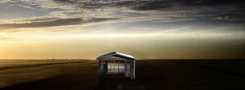
Later: I do have more images like this:
| « Walking the Backend | <-- previous post | next post --> | Under the Turf » |
|---|