Walking the Backend

Lately I’ve been deep inside the Research Catalogue, building an exposition that refuses to sit still. Instead of thinking of it as a repository or archive, I’ve been treating it more like terrain—something to move through, to wander, to get a little lost in. And honestly: I’m having a lot of fun with it.
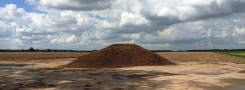
The exposition grows out of my ongoing NulNAP research: a series of performative walks along an imaginary coastline at zero metres above sea level. My guiding ideal for the exposition is simple but demanding: visiting it should feel like coming on a walk with me. Not reading about the work from a safe distance, but stepping into its pace, its hesitations, its detours.
That ambition immediately raises a practical question: how do you translate a walking practice into the backend logic of an academic platform? RC is powerful, but it’s not neutral. It wants structure, hierarchy, clarity. Walking, on the other hand, produces drift, repetition, and sideways connections. So a large part of this process has been about negotiating with the system—seeing how far I can stretch it without breaking it, and where its constraints might actually become productive.
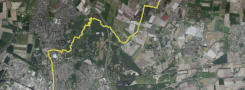
One of the most enjoyable challenges has been designing ways for visitors to access the conversations I had while walking with NedeR, my AI co-walker. These dialogues don’t live comfortably in a single format. Sometimes they are best approached as text, sometimes as sound, sometimes as something spatial—anchored to a particular location along the Zero NAP line. I ended up developing a small custom player that allows these conversations to be entered through maps, transcripts, and voices, depending on how you arrive.
That was… not trivial. There were moments where I felt more like a slightly obsessive frontend tinkerer than an artist-researcher. Window behavior, popups, reused views, embedded media players, all had to cooperate. At times the technical side felt like another performative walk: testing, failing, circling back, trying again from a slightly different angle.
What keeps me going is the sense that the form is doing real work here. The exposition doesn’t just document the research; it continues it. By allowing multiple paths—chronological, modal, thematic—it mirrors the way awareness emerged during the walks themselves: not linearly, but relationally.
So yes, this is a nerdy artist’s notebook entry. But it’s also a small celebration of what can happen when you treat a research platform not as a container, but as a landscape—and invite others to walk it with you.
| « New Knowledge | <-- previous post | next post --> | Learning to see [emptiness] » |
|---|