Under the Turf
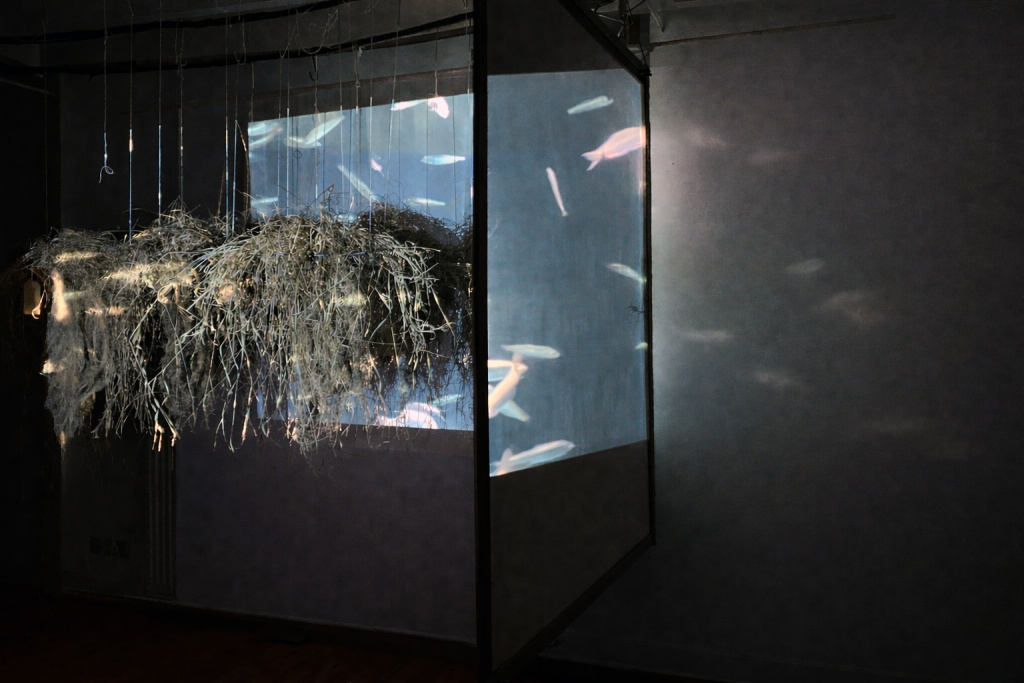
The installation Under the Turf, the Tide connects the landscape of the Eemland polder to two urgent challenges: sustainable food production and the restoration of biodiversity. The work invites a conversation about restoring balance between monoculture and biodiversity without sacrificing the functional capacity of the landscape. In doing so, Under the Turf offers a critical perspective on how the Netherlands might shape these types of landscapes in the future.
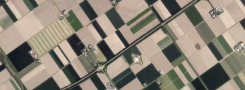
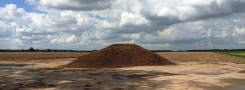
It was an “aha” moment — the realization that everything else exists in service of the grass, subordinate to it or flowing from it. The spatial openness, the treeless polders, the pattern of long straight ditches, the dikes and their histories — all are by-products of the hayfactory Eemland.
Under the Turf, the Tide emerged as a metaphor for the productive relationship between humans and nature in Eemland. The idea that the entire area functions as a “machine,” converting sunlight, water, and soil nutrients into food, formed the core of the concept. I collected grass samples from the region and brought them home to cultivate and study. After a year, I decided to dry both the grass and its roots. This step gave me insight into how not only the visible upper part of the plant, but also the underground system — the roots — plays a crucial role in the production cycle of the landscape.
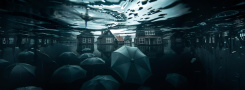
The dried grass and root samples play a central role in the installation. They are carefully suspended at eye level or slightly above, creating the illusion of a meadow floating in mid-air. Visitors are thus given the opportunity to observe both the visible landscape and the underlying, invisible root network. The form of the grass is fragile and delicate, while the roots create intricate patterns that symbolize the depth and complexity of the land.
Under the Turf, the Tide invites visitors to uncover the layers of the landscape — from the visible grass and the invisible roots that sustain it, to the complex interplay between humans, nature, and technology. The work encourages reflection on how we shape the landscape, and how the landscape, in turn, shapes us.
| « Learning to see [emptiness] | <-- previous post | next post --> | Second High Water Popupstore » |
|---|