Hoogwaterwinkel
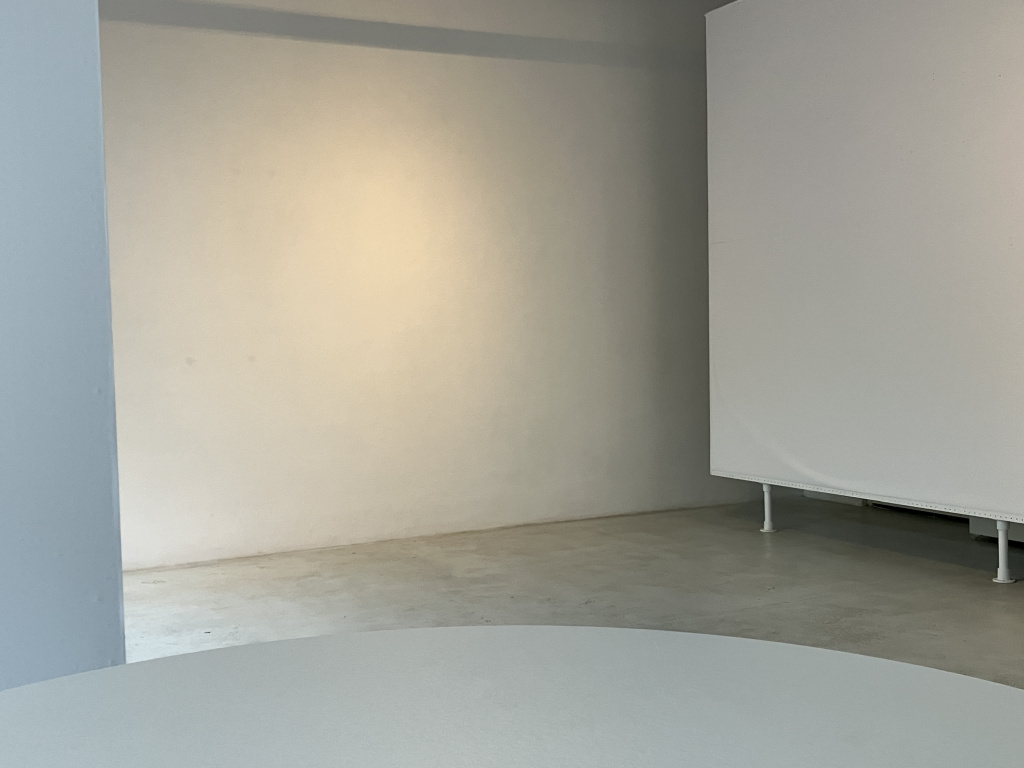
“The ideal gallery space is a white, cube-shaped room, in which the walls and ceiling are unshadowed, the floor unobtrusive, and the art is isolated from everything that would detract from its self-sufficiency.”
— Brian O’Doherty, Inside the White Cube
The Hoogwaterwinkel was born in the clarity of a white cube. It began as an empty, neutral space—one of those minimal environments where every object, every gesture, and every conversation takes on weight and resonance simply because there is so little else. This was the gallery condition, one that asked visitors to step away from everyday life and enter into a realm of abstraction and reflection. Yet from the outset, the Hoogwaterwinkel was not content to remain enclosed in that purity. It wanted to reach out, to touch daily life, to disturb it.
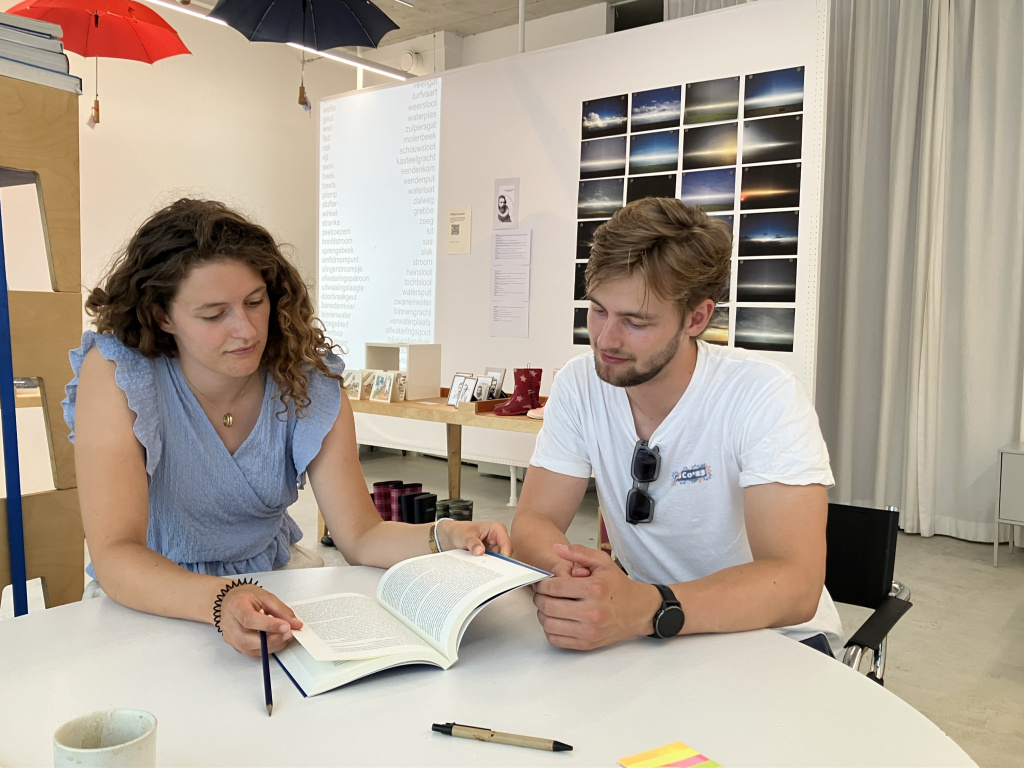
I developed the space into a store, an environment that was not about commerce in the conventional sense but about encounter. Instead of shelves of plastic goods, we placed rain boots with the Northern European Enclosure Dam logo, bags of sand, tide charts, and water maps. Instead of checkout counters, we offered conversations. Instead of sales pitches, we invited reflection on climate change, sea-level rise, and the radical imagination needed to survive them.
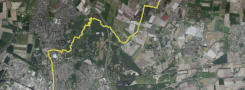
Visitors could step inside and browse, but what they really encountered was a question: what does it mean to live in Rotterdam, a city below sea level, if the dikes were gone? The Hoogwaterwinkel was never a gimmick. It was an intervention. Each item in the store carried both symbolic and practical weight: sandbags as both protection and metaphor, books as both reference and provocation, guided walks along the NulNAP line as both leisure and speculative training for a future coastline. Every purchase was a donation to Stichting Noordzeedijk—a foundation that uses the fantastical idea of a mega-dam across the North Sea as a wake-up call, not a blueprint.
The rhythm of the winkel was different from the stillness of the cube. People wandered in, asked questions, tried on boots, browsed through prints of climate scenarios, signed up for walks. The atmosphere was conversational, social, sometimes playful, sometimes uneasy. We did not want panic, but we did want friction. The Hoogwaterwinkel made distant abstractions immediate. Suddenly, sea-level rise was not just a graph in a report but a pair of rubber boots in your size, waiting by the door.
And yet, despite this energy, there was always the shadow of the white cube in the background—the awareness that this was still an art space, still framed by walls that had once displayed photos. The cube and the winkel were not separate worlds, but alternating phases in a cycle.
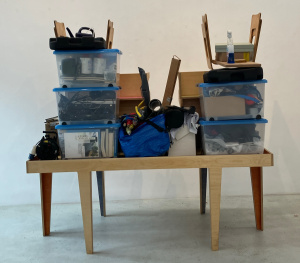
At the end of August, that cycle came full circle. On 31 August, after a month of encounters, we moved the Hoogwaterwinkel back into the silence and minimalism of the white cube. The boots and sandbags were packed away, the books closed, the conversations paused. The shop was gone, but the questions linger. What had been a lively store became once again an empty, neutral room—ready for the next act of imagination.
Closing the Hoogwaterwinkel was not an ending but a return. The white cube reclaimed the space, but now it held the memory of a winkel inside it, like sediment beneath the floorboards. The experiment has been successful, and I hope it can be repeated along the NulNAP line at some future date—perhaps surfacing again in another city, another polder, another place where water is both a threat and a mirror.
The Hoogwaterwinkel, in its brief life, showed that the white cube and the store are not opposites but stages in a process. First abstraction, then encounter, then back to abstraction again. Each stage makes the other possible. And perhaps that is the lesson: that our future with water will also require such oscillations—between stillness and action, between imagination and pragmatism, between fear and resilience.
On 31 August, when we closed the doors, the silence of the white cube returned. But if you pressed your ear to the walls, you could almost still hear the murmur of conversations, the rustle of browsing, the questions hanging in the air like humidity before a storm.
| « Terps | <-- previous post | next post --> | Walking with AI: From Practice to Paper » |
|---|