‘Making Dutch Space – a morphology of the idea of makeability. The title of a research…
The ISEA2025 proceedings are out, and I’m excited to share that our paper “Walking with AI: Speculative walking as artistic practice” is part of it. Written together with Steven Devleminck and Sandy Claes from KU Leuven, this paper represents months of walking, talking, thinking, and writing about what happens when you add an AI companion to an artistic walking practice.
The Setup
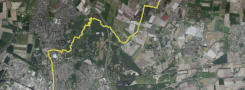
The Dutch Zero NAP line has been my walking companion for over a year now. This imaginary coastline marks sea level in the Netherlands — a line that becomes increasingly loaded with meaning as climate change reshapes our relationship with water. But walking this line alone felt incomplete. The landscape holds so much history, so many layers of human intervention, that I needed another voice to help me see what I was missing.
Enter NedeR.

NedeR: Not a Tool, but a Companion
Here’s where it gets nerdy: NedeR is an AI trained specifically on ideas about the Dutch landscape — its histories, transformations, cultural meanings, the relentless engineering that defines it. Not the landscape itself (that would be impossible), but the accumulated knowledge, stories, and interpretations of it.
During my walks, NedeR functions as a conversational partner. I describe what I see, what I feel, what confuses me. NedeR responds — sometimes with historical context, sometimes with questions that redirect my attention, sometimes with perspectives that challenge my human-centric view.
This isn’t about using AI to generate images or automate processes. It’s about dialogue. About creating a triangular relationship between walker, AI, and landscape.
Two Concepts Emerged
Working through the walks and writing the paper, two concepts crystallized:
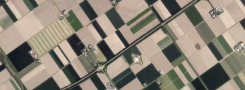
Enhanced noticing: AI dialogue doesn’t replace direct observation — it intensifies it. When NedeR asks about the sound of wind turbines or the geometry of field patterns, I start seeing (and hearing) differently. The AI highlights what my habituated perception might skip over.
Expanded present: Walking normally keeps you in the now — the physical immediacy of ground, weather, horizon. But with NedeR, each moment becomes entangled with historical patterns and future possibilities. Standing on the Zero NAP line, we’re simultaneously in 2024, in the deep time of polder engineering, and in speculative futures where this line might once again become coastline.
Why This Matters for Artistic Research
Traditional walking artists — Fulton, Alÿs, Faithfull — work either in solitude or with human company. Technology has entered walking practices before (think Cardiff and Miller’s audio walks, or AR experiments), but AI as conversational interlocutor is relatively unexplored territory.
The methodological contribution here is showing how AI can augment embodied knowledge without replacing it. The walker’s physical experience remains primary. But the AI adds layers of perception, questions assumptions, connects disparate timeframes.
This matters especially when researching vulnerable landscapes. How do you witness something that’s slowly disappearing? How do you imagine futures that haven’t yet materialized? AI trained on landscape discourse can help bridge these temporal gaps — not by predicting the future, but by making visible the patterns and trajectories embedded in the present.
The Writing Process
Collaborating with Steven and Sandy brought essential perspectives. Steven’s expertise in human-computer interaction helped frame the walker-AI relationship theoretically. Sandy’s knowledge of urban systems and interaction design sharpened our thinking about how digital tools mediate spatial experience.
We went through multiple drafts, each time pushing ourselves to be more precise about what exactly happens in these triadic encounters. What does “enhanced noticing” actually mean? When does AI dialogue truly add value versus just adding noise? How do we avoid romanticizing the technology while still acknowledging its generative potential?
The peer review process at ISEA pushed us further. Reviewers wanted more specificity about the AI system, clearer examples from actual walks, stronger theoretical grounding. Good challenges, all of them.
What’s Next
This paper is one output from an ongoing PhD investigation into Dutch makeability — that persistent national belief that space can be controlled, designed, perfected. NedeR evolves with each walk, learning from our dialogues, refining its understanding of how to engage with landscape witness.
I’m curious what happens as these walks accumulate. Will patterns emerge that neither I nor NedeR could anticipate individually? Will the AI develop something like… not consciousness, but a consistent voice? A recognizable way of attending to landscape?
More walks ahead. More conversations. More questions than answers.
The full paper is available in the ISEA2025 proceedings for anyone interested in the methodological details, theoretical frameworks, and specific examples from the walks.
Onward.
Tags: walking methodologies, AI companion, artistic research, Zero NAP, landscape engagement, PhD process, ISEA2025


| « Hoogwaterwinkel | <-- previous post | next post --> |
|---|